 VapeWholesaleHub
Caramel Ice Handling Product Recalls Professionally — Duty and Tax Worked Out
Retailers rarely lose money on caramel ice because of price. They lose money because the first container was bought on a photograph. This page walks through what actually matters when you source caramel ice at scale, written from the buying desk rather than the marketing department.
Pricing and Margin
Watch the caramel ice price you pay over a year rather than per order. Factories respond well to visible volume, and a quarterly review is usually worth more than a hard negotiation each time.
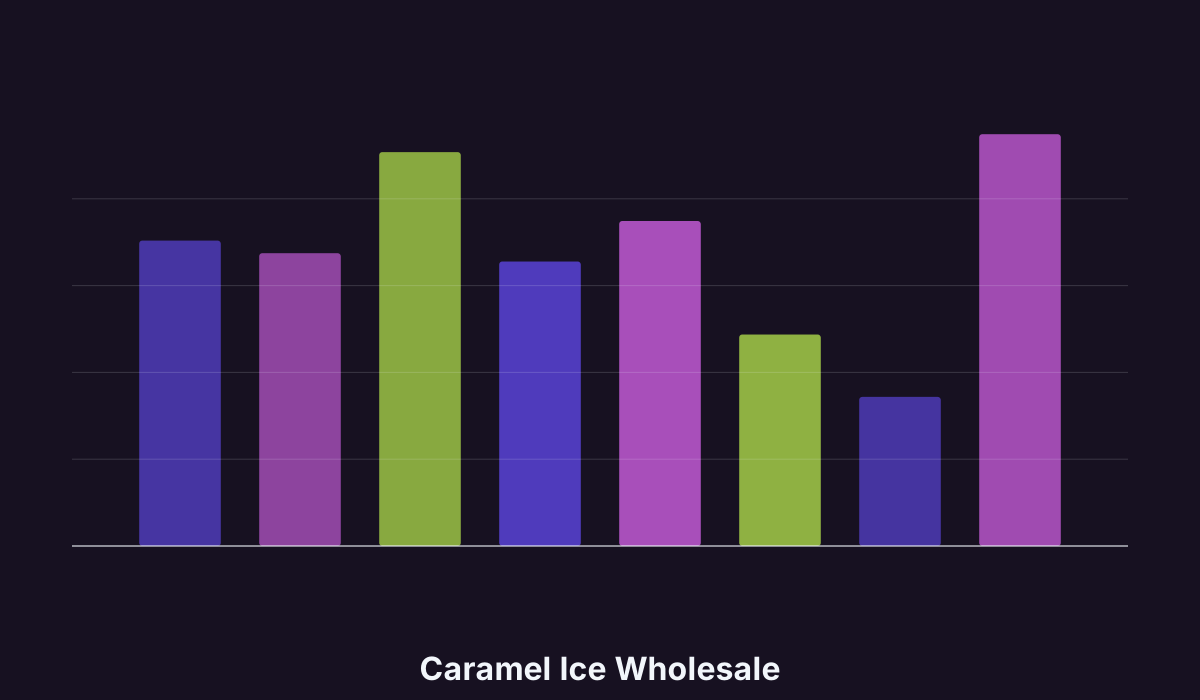
Indicative reference points for planning purposes: entry tier from USD 2.12 per unit at 2000 units, mid tier at USD 1.83, and volume tier at USD 1.41 for full container quantities. These figures move with specification, packaging and freight, so treat them as a shape rather than a quote.
How Caramel Ice Fits the Assortment
A tight caramel ice range with deep availability usually outsells a wide range with thin stock. Customers who find their line in stock come back; customers who are told to wait do not.
Category planning for caramel ice works best when you map it against three shopper types: the restocker who already knows what they want, the switcher who wants something stronger, and the explorer who buys on flavour name alone.
Merchandising and Listing Tips
Rotate caramel ice facing rather than price for the first month. Visibility changes sell-through more reliably than a small discount, and it does not train customers to wait for offers.
Logistics That Protect Margin
Carton dimensions for caramel ice are a design decision, not a packing afterthought. A few centimetres on the master carton can change how many units fit a pallet, and that repeats on every order.
Split caramel ice shipments across two sailings when the order is large enough. It costs slightly more but removes the risk of a single event wiping out a full quarter of stock.

What to Fix Before Approving Caramel Ice
Two specifications that matter more than buyers expect: the seal integrity after a drop test and the consistency of the draw from first use to last. Both are measurable before you commit to volume.
Good caramel ice specs describe the failure boundaries, not just the target. Stating what is unacceptable gives the factory a clear production window instead of a single point they will miss half the time.
| Product category | Pod system |
|---|---|
| Resistance band | 1.0 - 1.2 ohm |
| Capacity tolerance | +/- 5% |
| Puff count method | Machine cycle 2s on / 18s off |
| Master carton | 200 units |
| Carton weight | 3.6 kg |
| Shelf life | 12 months |
| Storage | 15-25 C, dry, away from direct light |
Practical Checklist
- Check carton dimensions against your freight quote before confirming.
- Write the complaint threshold into the order terms.
- Keep sealed retained samples from every production batch.
- Agree the tolerance band in writing before approving artwork.
- Confirm the current customs classification with your own broker.
- Plan the switch from air to sea freight before you need it.
Frequently Asked Questions
What if a batch does not match the sample?
Keep the retained samples from the approval stage. If a delivered batch measurably differs, we compare against the retained set and resolve it against the production record. This is why we insist on sealed retained units from every run.
Can I mix strengths in one order?
In most cases yes, as long as each strength meets the minimum run length. Mixed strength cartons are popular with retailers building their first display because they show the full ladder without over committing.
How are price changes handled on repeat orders?
{K} pricing is reviewed against input costs and volume rather than adjusted casually. Any change is confirmed in writing before the next order is scheduled, with the reason stated so you can judge it yourself.
Can you match an existing product I already sell?
Often yes, provided we can measure it properly. Send a physical sample and we will report back on what can be matched, what will differ slightly, and why. An honest gap is more useful than a vague promise.
Do you provide compliance documents?
Every shipment leaves with the documentation set relevant to your market, including batch records and test reports where required. Your local rules still determine what you must file, so confirm those with your broker before import.
Next Step
Send us your current caramel ice specification even if you are not planning to move suppliers. A second read of a document you use every month is usually worth the ten minutes.
Related Reading
- Caramel Ice Humidity Control in Coastal Warehouses — Highly Regulated Markets
- Caramel Ice Working With a Local Compliance Partner — Specialist Vape Shops
- Caramel Ice Humidity Control in Coastal Warehouses — a Printable Checklist
- Caramel Ice Display Ideas for Small Counters — the Buying Desk
- Caramel Ice Staff Training Notes for Store Teams — First-Time Importers
- Caramel Ice Customer Education That Reduces Complaints — Entry-Level Price Points